Halkirk Solar
1 / 5
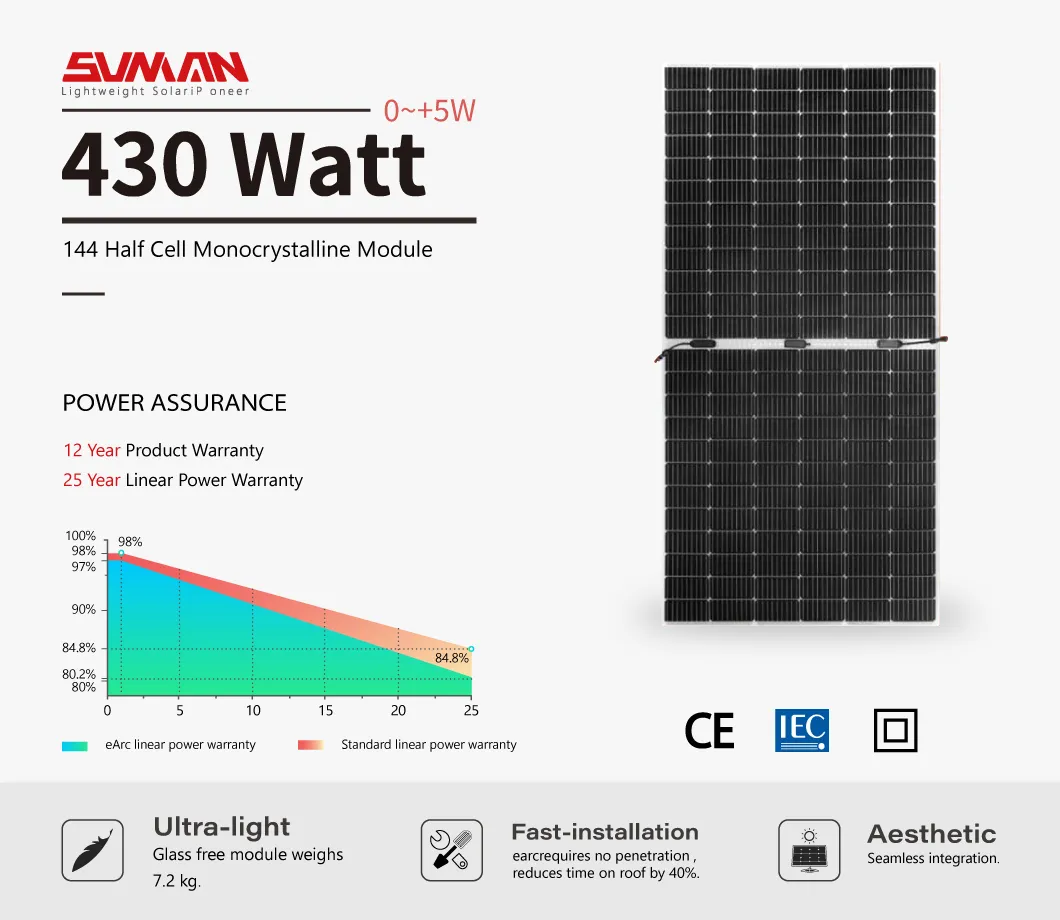
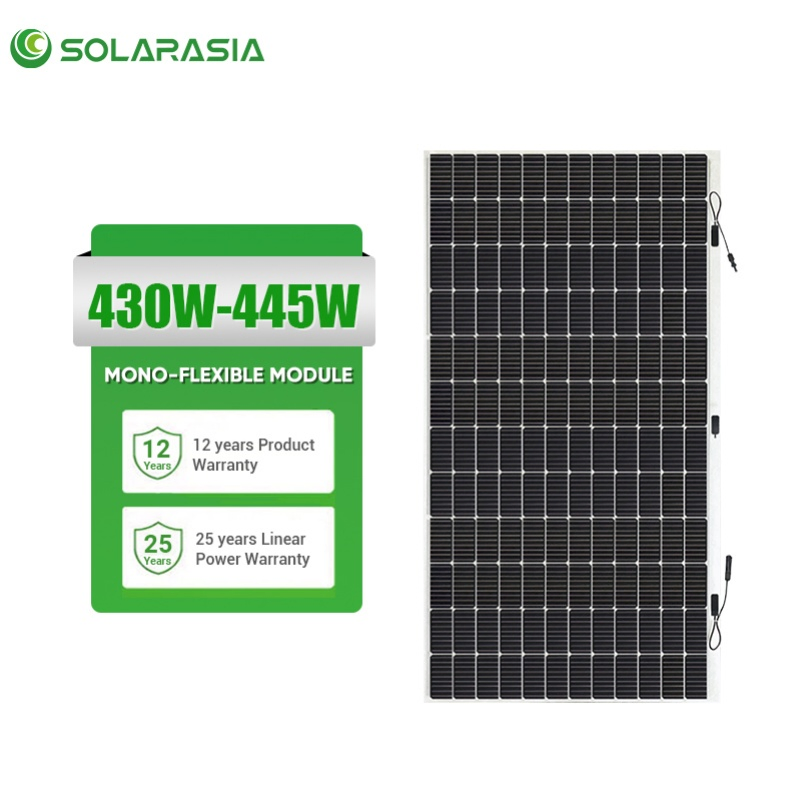
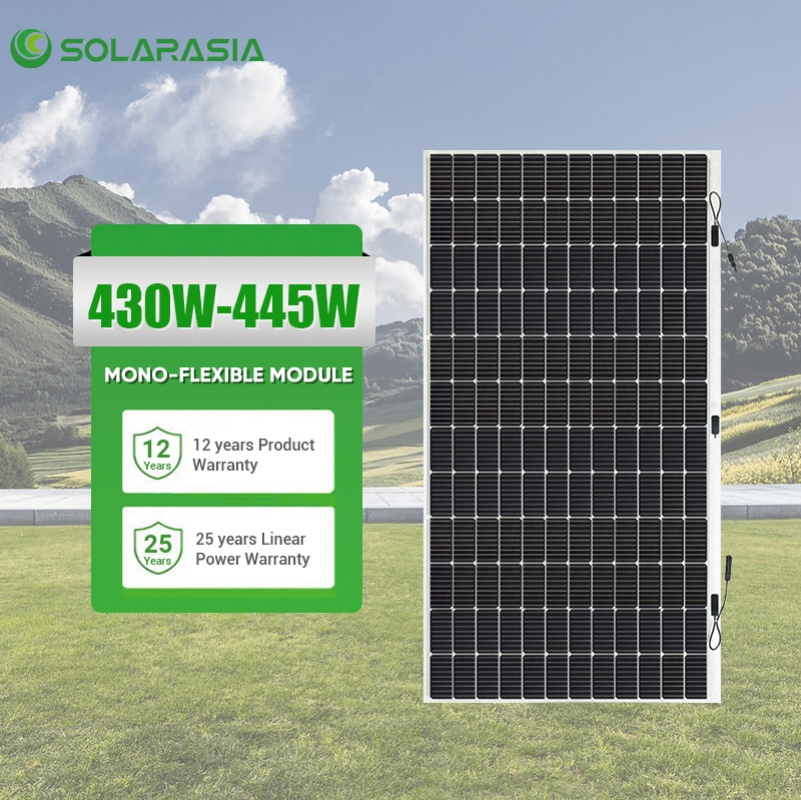
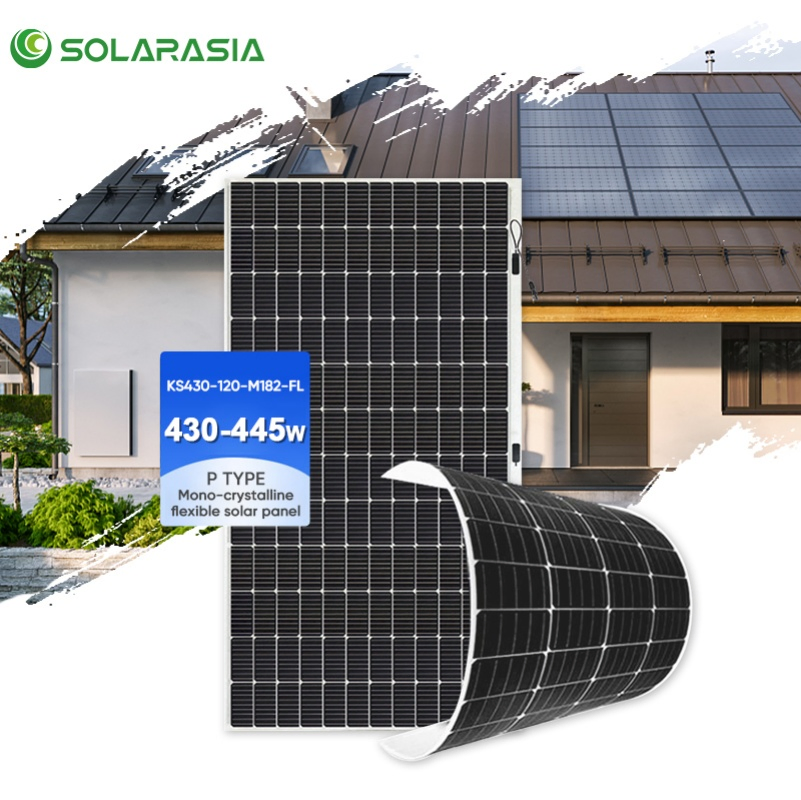
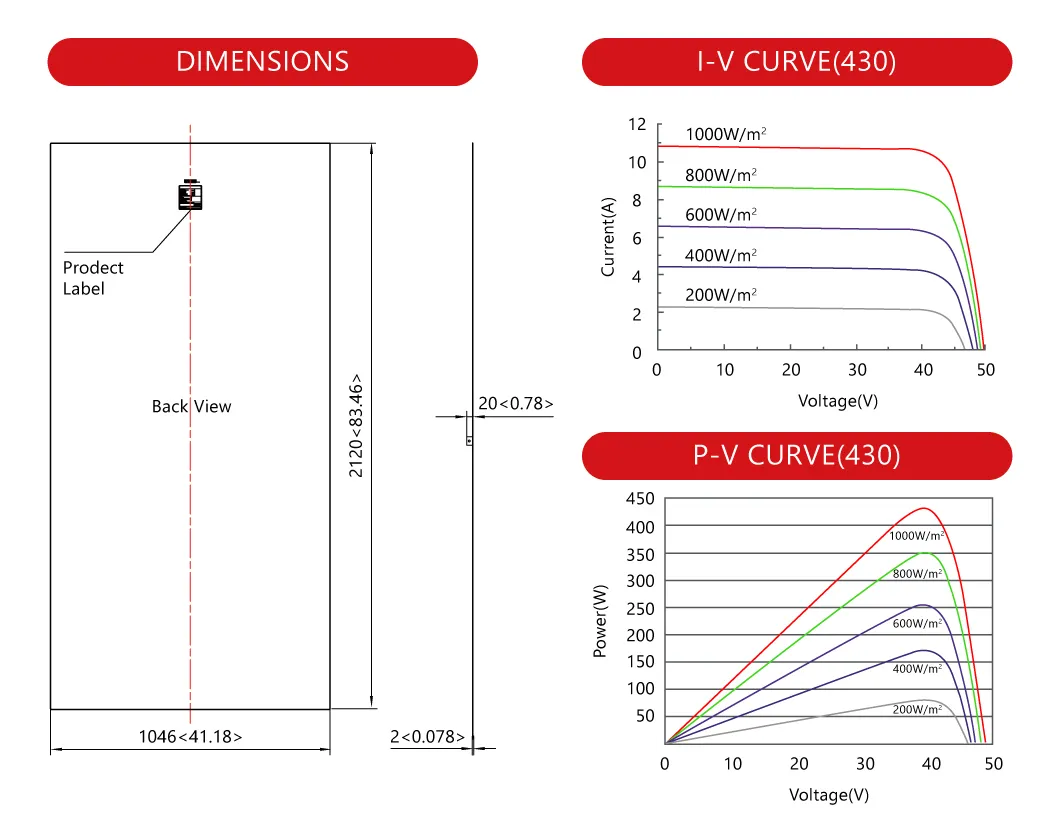
| STC | SMF430F-12X12UW |
|---|---|
| Maximum Power ( Pmax ) | 430 |
| Maximum Power Voltage ( Vmp ) | 42.0 |
| Maximum Power Current ( Imp ) | 10.24 |
| Open-circuit Voltage ( Voc ) | 49.8 |
| Short-circuit Current ( Isc ) | 10.74 |
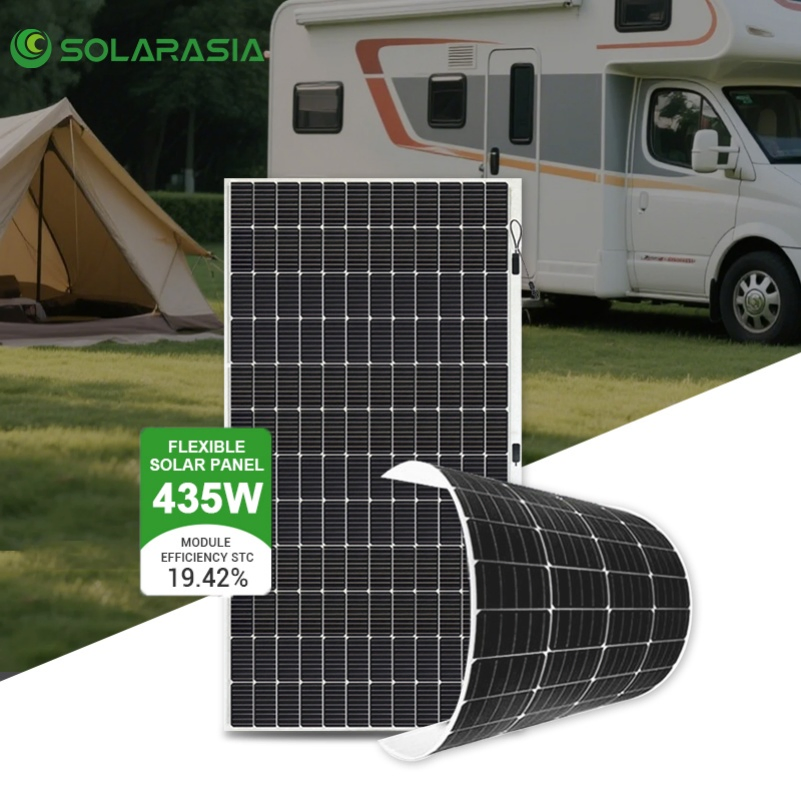
| Module Efficiency (%) | 19.2 |
| Operating Temperature | -40ºC to 85ºC |
| Maximum System Voltage | 1000V DC(IEC) |
| Maximum Series Fuse Rating | 20A |
| Application Class | Class A |
| Power Tolerance | 0/+5 W |
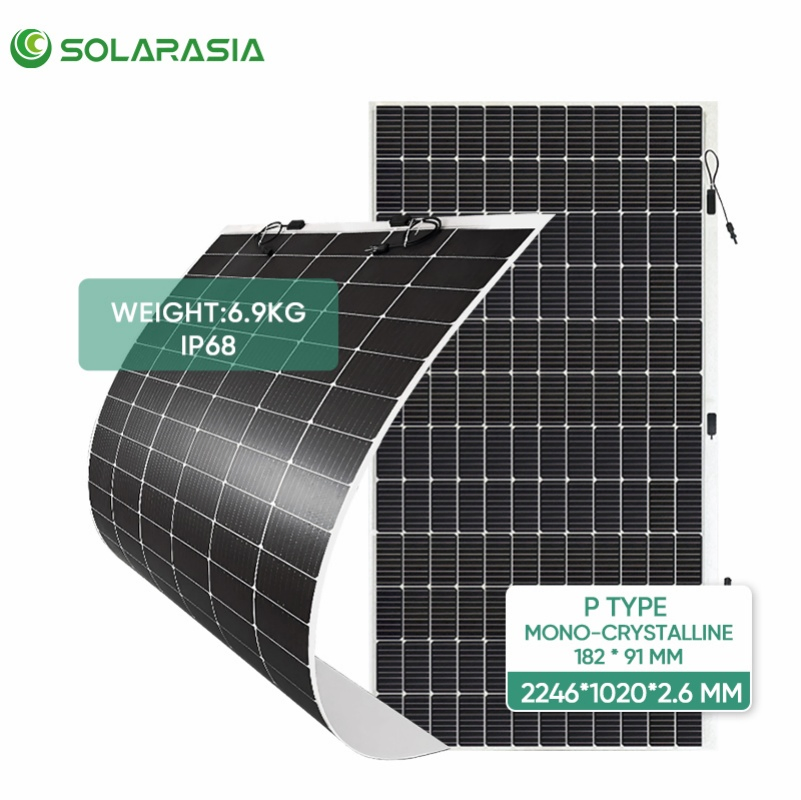
| Weight | 7.3KG |
| Size | 2120*1046*2mm |
| STC: Irradiance 1000W/m2, Cell temperature 25ºC, AM=1.5 | Tolerances of Pmax, Voc and Isc are within ±5% |
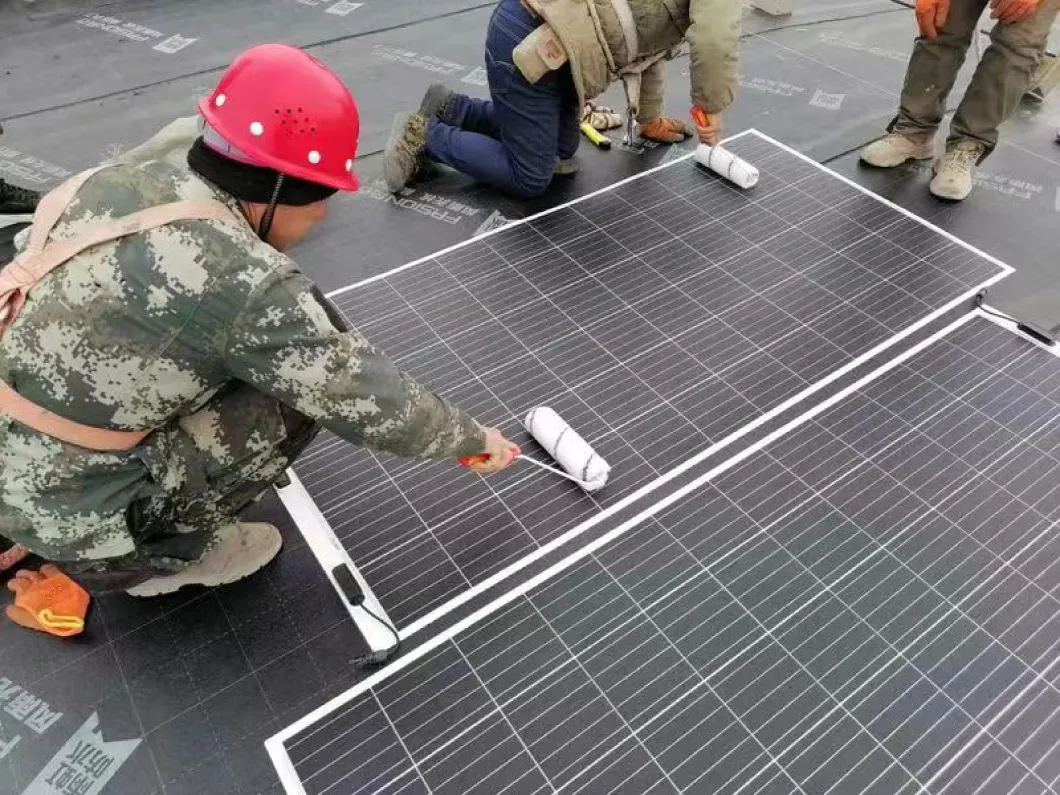
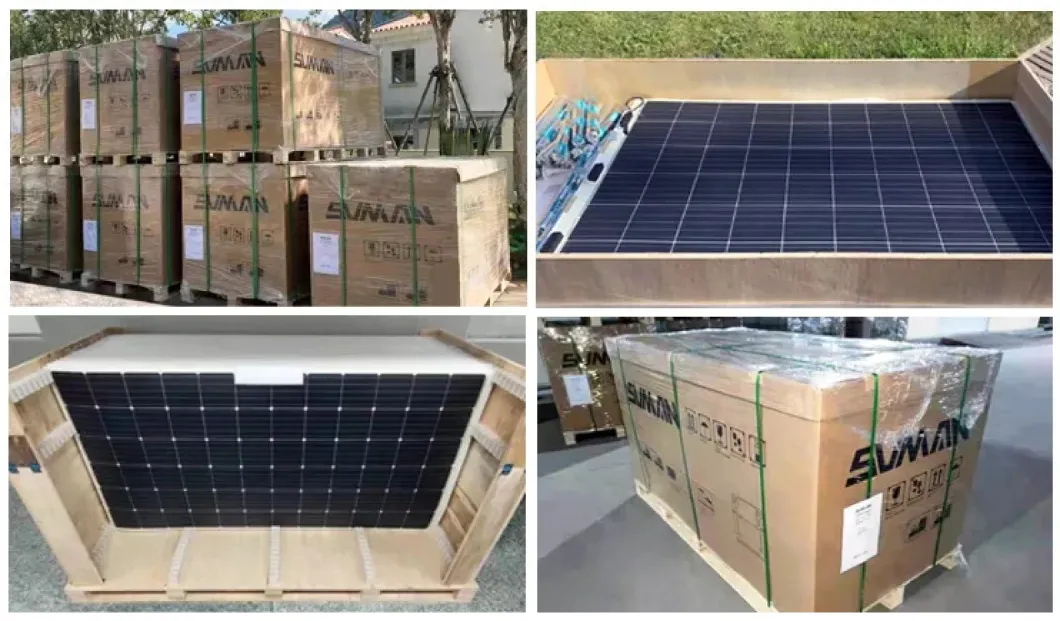

Q1: Can this flexible panel be walked on?
A: While it is highly durable and designed for marine decks, we recommend installing it on surfaces with firm support. Walking on it with soft-soled shoes is generally acceptable for maintenance, but avoiding heavy impact will prolong the panel's lifespan.
Q2: How do I mount this without drilling holes in my roof?
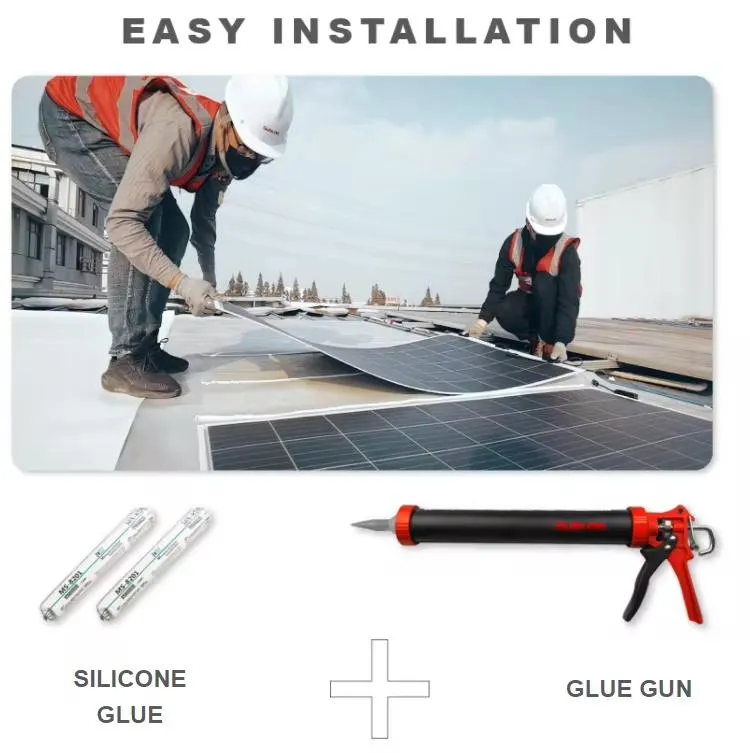
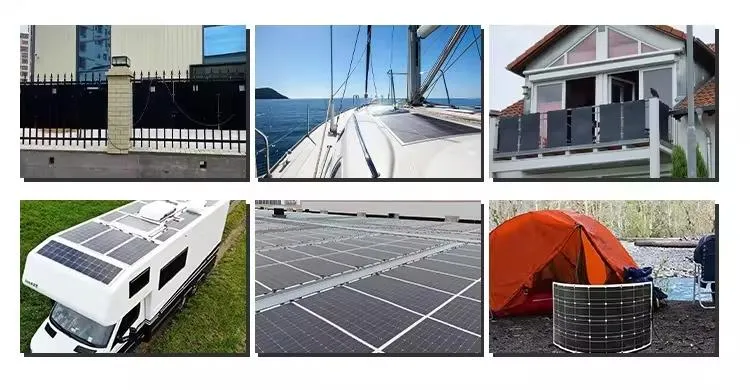
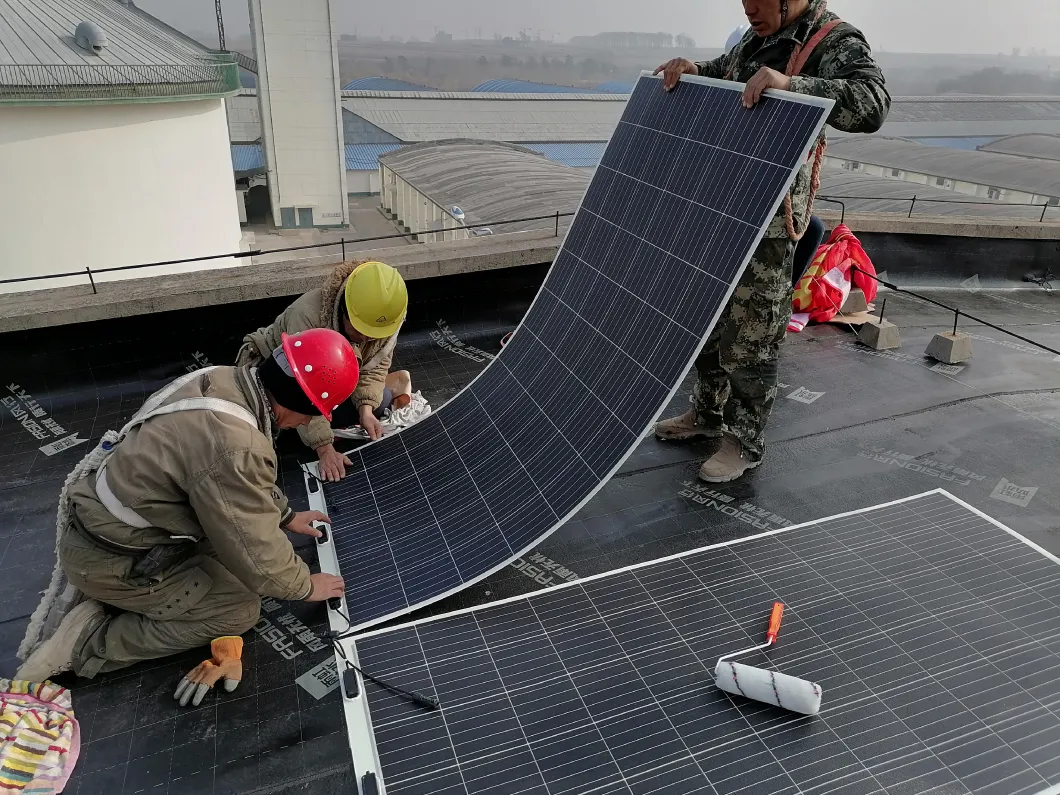
A: Most users install the panel using industrial-strength double-sided tape or silicone adhesive (such as Sikaflex). For temporary use, you can also use the built-in grommets with carabiners or ropes.
Q3: Does the flexibility affect the efficiency compared to rigid panels?
A: Our 144 half-cut cell technology ensures that the efficiency remains competitive with rigid modules. While rigid panels have slightly better cooling, the 430W flexible series is optimized for heat dissipation through its thin-profile materials.
Q4: Is it waterproof for use on a boat?
A: Yes, the panel and the junction box are IP67/IP68 rated, meaning they are fully protected against dust and can withstand powerful water jets or temporary immersion in water.
Q5: What is the expected lifespan of this monocrystalline flexible panel?
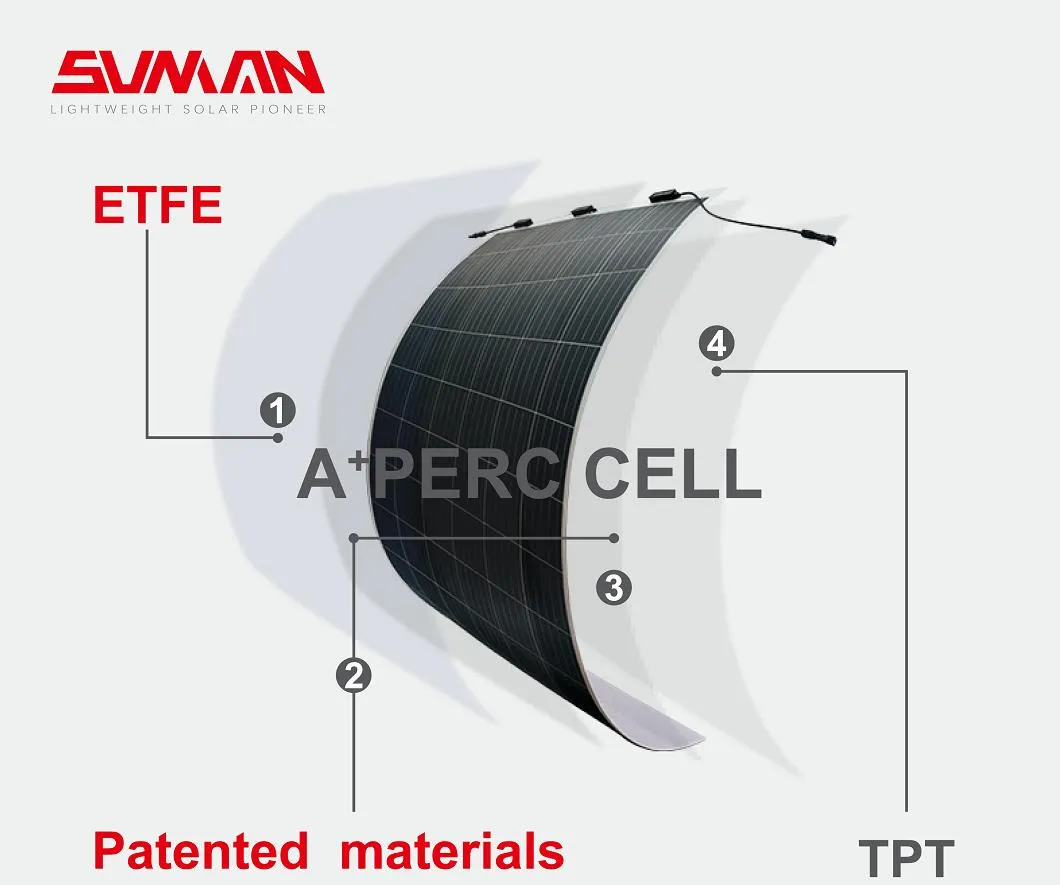
A: Built with premium materials and weather-resistant polymer encapsulation, these panels are designed to perform reliably for over 15 to 20 years under standard environmental conditions.
Q6: Can I connect multiple 430W panels in series or parallel?
A: Yes. You can connect multiple panels in series to increase system voltage or in parallel to increase current, depending on your solar charge controller and battery system specifications.